

You may find yourself facing the daunting task of filing a water damage insurance claim, especially if you live in San Antonio's 78232 area, where weather-related incidents can disrupt your life. This comprehensive guide will walk you through the vital steps and tips to navigate the claims process effectively. From understanding your policy coverage to knowing the documentation needed, you will gain insights to help you protect your property and ensure you receive the compensation you deserve. Arm yourself with the knowledge to tackle this challenging situation head-on.
Key Takeaways:
- Types of Coverage: Understand the different types of water damage insurance policies available, including homeowners' insurance and flood insurance, and how each applies in San Antonio.
- Documentation Process: Ensure proper documentation of the damage with photographs and detailed notes to support your insurance claim and expedite the process.
- Filing Timeline: Be aware of the timelines for filing water damage claims to avoid issues and maximize your chances of a successful claim.

Types of Water Damage Insurance
Your understanding of the different types of water damage insurance is crucial for navigating claims efficiently. Here are the primary types:
| Type | Description |
| Homeowners Insurance | Covers water damage from sudden incidents, like burst pipes. |
| Flood Insurance | Specifically covers damages from flooding, often required in high-risk areas. |
| HOA Insurance | Protects common areas; may impact individual homeowner policies. |
| Building Insurance | Covers structural repairs, usually part of a homeowners policy. |
| Contents Insurance | Covers personal belongings affected by water damage. |
Recognizing the type of coverage you have will help streamline your claims process.
Categorization of Water Damage
On the topic of categorization, water damage is typically classified into three categories based on the source and level of contamination. These categories will help define your coverage options:
Coverage Levels
Assuming you have an understanding of the potential damage, it's important to know the various coverage levels available to you.
It is advisable to review your policy thoroughly, as coverage levels can vary significantly. Basic policies may only cover sudden and accidental damage, while comprehensive packages often include coverage against mold and other secondary damages. This awareness allows you to choose a policy that effectively protects your property and possessions from various water damages.
Factors Influencing Water Damage Claims
Clearly, multiple elements can affect the outcome of your water damage insurance claims. Understanding these factors can help you prepare effectively:
- Type of water damage (clean, gray, or black)
- Extent of the damage
- Your insurance policy coverage
- Timeliness of filing the claim
- Documentation provided
Thou shouldn't underestimate the impact of these variables on your claim process.
Location and Environment
Water incidents are often influenced by your geographical location and the surrounding environment. San Antonio's humid climate can lead to higher risks of plumbing failures and flooding, which could affect the frequency and severity of water damage claims. Understanding your neighborhood's susceptibility to water damage can guide you in obtaining adequate coverage and taking preventive measures.
Policy Limitations
There's a chance that your insurance policy may contain limitations that affect your water damage claim. These restrictions may include exclusions for specific types of damage or caps on coverage amounts.
Another factor to consider is the waiting period or deductibles that may apply before you can collect your benefits. It's imperative to thoroughly review your policy and ask your insurance representative any questions you have about limitations to ensure that you're fully informed about what to expect when filing a claim.
Tips for Filing a Successful Claim
Keep these tips in mind to enhance your chances of a successful water damage insurance claim:
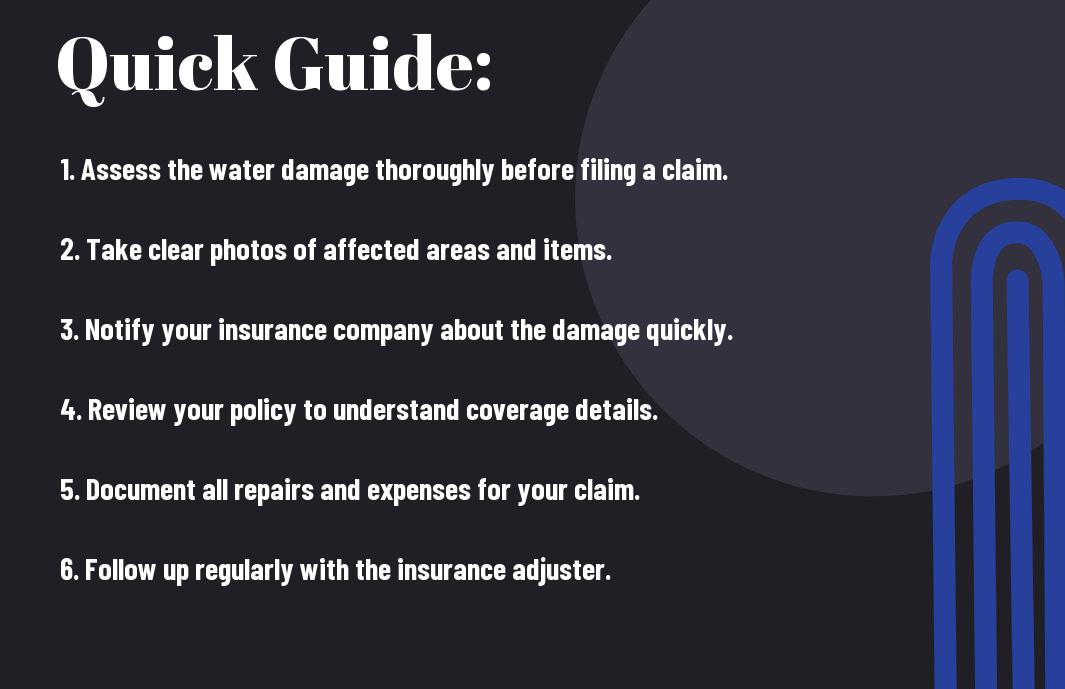
- Act quickly to report the damage to your insurance company.
- Document all damage with photos and videos.
- List all damaged items and their values.
- Keep receipts of repairs and temporary housing if needed.
- Communicate clearly and regularly with your adjuster.
After following these tips can lead to a more efficient claims process.
Documentation Essentials
To support your claim effectively, you must gather comprehensive documentation. This includes photographs of the damage, a written inventory of affected items, and receipts for repairs. If you were required to temporarily relocate, keep related expenses documented as well. Presenting thorough and organized records will strengthen your case.
Common Mistakes to Avoid
Any oversight can jeopardize your water damage claim's success. Avoid errors like underreporting damages, not documenting everything thoroughly, or delaying your claim submission. Be cautious about communicating too informally with adjusters, as misunderstandings may arise.
For instance, failing to document all water-damaged items can lead to undercompensation. If you assume your insurance company will remember everything, you risk leaving significant damages unreported. Miscommunication about your situation or lost paperwork can further delay your claim. Always ensure that you maintain detailed notes regarding all conversations and transactions related to your claim to avoid these pitfalls.
Step-by-Step Claims Process
Now, understanding the step-by-step claims process for water damage in San Antonio can streamline your journey toward recovery. Follow these important guidelines to ensure you stay on track.
| Step | Action |
| 1 | Document the damage thoroughly with photos and videos. |
| 2 | Contact your insurance company to report the claim. |
| 3 | Submit your written claim along with all documentation. |
| 4 | Schedule an inspection with the insurance adjuster. |
| 5 | Receive the settlement offer and review it carefully. |
Initial Steps to Take
Steps to initiate your claim involve addressing the immediate damage and documenting everything. Start by taking detailed photographs and videos of all affected areas and items. This visual evidence will be vital for your claim.
Follow-Up Actions
Some actions to take after submitting your claim involve consistent communication and monitoring progress. Stay in touch with your insurance adjuster and follow up on any required documentation or adjustments to the claim.
Plus, it's important to keep records of all communication, including emails and phone calls with your insurance provider. This documentation can serve as a reference should any discrepancies arise throughout the process. Additionally, quickly responding to requests for further information can expedite your claim resolution, leading to faster recovery from your water damage incident.
Pros and Cons of Water Damage Insurance
For homeowners in San Antonio, understanding the pros and cons of water damage insurance is vital for making informed decisions regarding your coverage. Below is a breakdown of the benefits and potential drawbacks of having water damage insurance to help you weigh your options.
| Pros | Cons |
|---|---|
| Covers repair costs for water damage | May have high premiums |
| Provides peace of mind | Excludes certain types of water damage |
| Can help with additional living expenses | Claims process can be lengthy |
| Increases home resale value | May require a deductible |
| Offers financial protection and security | Policy limits may restrict coverage |
Benefits of Coverage
Pros, having water damage insurance can significantly ease the financial burden of unexpected repairs. It typically covers repair costs for water damage, which can help protect your investment in your home. Additionally, it provides peace of mind, knowing that you are safeguarded from the costs associated with severe water-related incidents.
Potential Drawbacks
Even though water damage insurance offers numerous advantages, it also comes with potential drawbacks. High premiums can make it costly, and certain types of water damage may be excluded from coverage altogether, leaving you vulnerable to specific incidents.
Another aspect to consider is that the claims process can often be lengthy and complicated, which may delay the funds you need for repairs. Additionally, you may be required to meet a deductible before your coverage kicks in, leading to more out-of-pocket expenses. Understanding these elements is critical for making the best choice for your situation.
Frequently Asked Questions
After navigating the complexities of water damage insurance claims, you may have questions that require clarification. This section aims to address common inquiries and provide you with the information needed to make informed decisions about your policy and claims process. Understanding these FAQs will empower you as you deal with water damage claims in San Antonio, Texas.
Common Concerns
Even the most prepared homeowners often experience anxiety when dealing with potential water damage claims. Concerns typically revolve around coverage limits, deductibles, and what types of water damage are actually covered under your policy. It's important to understand these aspects to alleviate some of your worries and better prepare for any unexpected situations.
Clarifications on Coverage
Even small misunderstandings regarding your insurance coverage can lead to unforeseen expenses during water damage claims. Policies may differ significantly in what they cover, including distinctions between sudden leaks, gradual damage, and flooding from external sources. Understanding these nuances will help you clarify your specific policy details, enabling you to address any issues more effectively.
With a clear understanding of your insurance policy, you can navigate the complexities of water damage coverage more confidently. It's important to review your policy and speak with your insurance agent to clarify what types of water damage are covered and any exclusions that may apply. By doing this, you position yourself to handle any claims process efficiently and with less stress.
To wrap up
As a reminder, navigating water damage insurance claims in San Antonio, Texas 78232 requires you to be informed and prepared. You should document all damage thoroughly, understand your policy specifics, and communicate effectively with your insurer. Knowing your rights and the claims process can significantly impact the outcome of your situation. Additionally, consider consulting with professionals, such as adjusters or legal advisors, to ensure that you receive the compensation you deserve. By taking these steps, you can better protect your interests and effectively manage any water damage claims that arise.
FAQ
Q: What steps should I take immediately after experiencing water damage in my home?
A: The first step is to ensure your safety. If there is any danger from electrical appliances or structural instability, evacuate the area. Once you are safe, document the damage by taking photos and videos of affected areas and possessions. Next, contact your insurance provider to report the damage and initiate the claims process. It's also advisable to stop the source of water, if possible, and begin mitigating further damage, such as removing excess water and drying out the space. Keep records of all repairs and communications with your insurance company.
Q: How can I determine if my water damage is covered by my insurance policy?
A: To determine coverage, review your homeowner's insurance policy carefully. Most standard policies cover sudden and accidental water damage, such as from burst pipes or a heavy rainstorm. However, damage from gradual leaks or floods may not be covered. If you are unsure, contact your insurance agent for clarification on your policy's specific terms regarding water damage. Additionally, consider whether you have separate flood insurance, which is often necessary for specific types of water damage.
Q: What documentation do I need to provide when filing a water damage insurance claim?
A: When filing a claim, gather comprehensive documentation to support your case. This includes photographic evidence of the damage, a detailed list of damaged or lost items, receipts for repairs or temporary housing if applicable, and any reports from water damage restoration professionals. Detailed records of communication with your insurance company are also important. Submitting thorough documentation can help expedite the claims process and ensure that you receive the appropriate compensation.