
There's a lot to navigate when faced with water damage in your home or business. This comprehensive guide is designed to help you understand the steps for effective water damage restoration in Boise, Idaho, 83702. From assessing the extent of the damage to choosing the right professionals and taking preventative measures, you will find all the information you need to address the situation efficiently. Empower yourself with the knowledge necessary to restore your space and protect your property from further issues.
Key Takeaways:
- Water Damage Assessment: A reliable restoration service in Boise will conduct a thorough inspection to identify the extent of water damage and the source of the problem.
- Immediate Response: Quick action is important to prevent further damage; professionals should be contacted immediately for effective restoration services.
- Comprehensive Restoration Process: The process typically includes water extraction, drying, cleaning, and repair to restore the affected area properly.
- Insurance Assistance: Many local restoration companies can assist with insurance claims, helping homeowners navigate the process more efficiently.
- Expertise and Equipment: Professional services utilize advanced equipment and trained technicians to ensure thorough damage control and restoration.
Understanding Water Damage
While you're managing your property, understanding water damage is necessary to protect your home and belongings. Water damage can occur due to various events, and the extent of the damage often depends on the source and length of exposure. Your prompt assessment and action can significantly minimize costs and prevent long-term issues.
Types of Water Damage
- Clean Water Damage: Resulting from a clean water source, like a broken pipe.
- Gray Water Damage: Caused by water from appliances and sinks that can potentially be harmful
- Black Water Damage: Comes from sewage and is highly contaminated.
- Storm Water Damage: Resulting from heavy rainfall or flooding.
- Overflow Damage: Occurs when overflow from bathtubs or sinks spills.
Any type of water damage can lead to severe consequences if not addressed timely.
| Type | Description |
| Clean Water Damage | Caused by water from a clean source, posing minimal health risks. |
| Gray Water Damage | From sources like washing machines, moderate risk to health. |
| Black Water Damage | Highly contaminated water that poses severe health risks. |
| Storm Water Damage | Flooding from storms can overwhelm and damage your property. |
| Overflow Damage | Happens when fixtures spill, causing localized damage. |
Common Causes of Water Damage
Clean water events often stem from a variety of common causes that you should be aware of. These factors can lead to extensive damage if not controlled swiftly.
Damage can occur from things like faulty plumbing, overflowing bathtubs, and severe weather conditions such as heavy rainfall or storms. Additionally, appliances such as washing machines and refrigerators may leak, leading to unexpected issues. Regular maintenance is key to preventing these situations. Always check your plumbing systems, appliances, and the roof as part of your routine home care.
Factors to Consider Before Restoration
Many homeowners often overlook significant factors before launching on a water damage restoration project. Understanding these elements can ensure your efforts are effective and efficient. Here are some key considerations:
- Extent of damage
- Type of affected materials
- Time sensitivity of the situation
- Presence of hidden water damage
Assume that you take these factors into account before starting the restoration process. They can greatly influence both the immediate and long-term results of your efforts.
Level of Damage
Now, assess the level of damage to your property. This can vary from minor leaks to severe flooding. Understanding the extent of the damage will help you determine whether to tackle the restoration yourself or to hire professionals.
Type of Affected Material
Assuming you have identified the type of materials that have been affected by water, this can significantly influence the restoration process. Different materials require specific approaches for effective cleanup and restoration.
This includes knowing how to treat wood, drywall, and textiles differently. For example, wood may warp if it's not dried quickly, while drywall often needs to be completely replaced if saturated. Understanding these nuances will help you make informed decisions during the restoration process.
Time Sensitivity
Any delay in addressing water damage can lead to more severe complications, like mold growth. The sooner you act, the better the outcome for your property.
Consider that water can cause damage within hours, so prompt action can minimize risks and costs. Knowing the urgency can help you prioritize restoration tasks to protect your home effectively.
Hidden Water Damage
Factors that contribute to hidden water damage can often be overlooked. Water can seep into areas that are not immediately visible, making it important to investigate thoroughly.
A deeper inspection can reveal damage behind walls, under floors, or in your home's insulation. If unnoticed, hidden water damage can lead to significant structural issues and health hazards, demanding immediate attention during your restoration efforts.
Tips for Homeowners
Once again, taking proactive measures can significantly reduce the impact of water damage on your property. Here are some tips for you to consider:
- Regularly inspect your home for signs of leaks or water accumulation.
- Keep gutters and downspouts clean to ensure proper drainage.
- Check appliances, such as washing machines and water heaters, for leaks.
- Install a sump pump in areas prone to flooding.
- Consider adding water sensors in vulnerable areas.
This list can help safeguard your home from potential water damage and its aftermath.
Early Detection
The sooner you identify potential water damage, the more effective your response will be. Regular inspections of your property can help you notice unusual dampness, discoloration on walls, or musty odors early on. Addressing these indicators immediately can save you money and prevent further complications.
Effective Water Mitigation
To lessen the impact of water damage, it is vital to act swiftly. If you suspect water intrusion, promptly remove any standing water and dry out affected areas with fans or dehumidifiers. This action will help prevent mold growth and structural deterioration.
Another method to enhance your water mitigation efforts involves properly sealing cracks and vulnerabilities in your home's exterior. Ensure that windows, doors, and foundations are well-sealed to minimize potential water entry points, and regularly check these areas for wear and tear.
Maintaining a Safe Environment
Even if water damage occurs, maintaining a safe environment is necessary for you and your family. Ensure that you are aware of hazardous materials, such as mold or contaminated water, that may develop after flooding. Prioritize your health by wearing protective gear if you attempt any remediation yourself.
Plus, considering professional assistance can significantly reduce your risk of exposure to harmful substances while addressing the water damage. Trained specialists can diagnose the extent of the damage and ensure thorough cleanup, leading to a safer home environment.
Preventing Future Damage
To prevent water damage in the future, it is important to implement comprehensive home maintenance practices. Regular checks and timely repairs will minimize risks associated with leaking pipes, appliances, and roofs.
Homeowners who stay vigilant about routine maintenance and invest in preventative measures, such as proper drainage systems and regular inspections, will safeguard their properties against the threat of water damage over time.
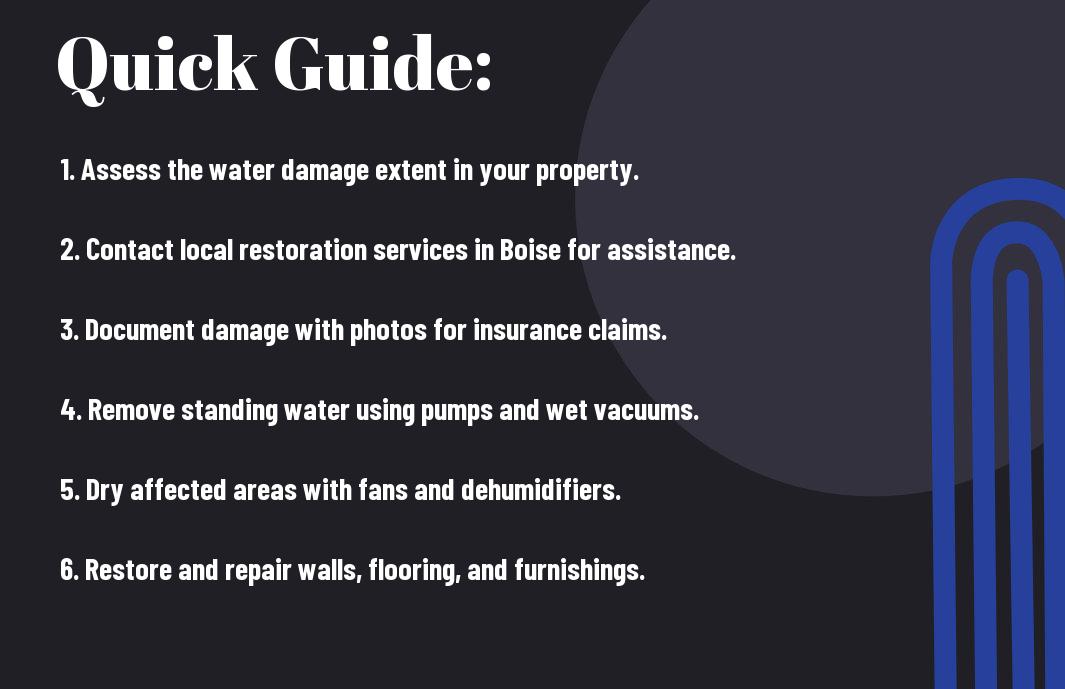
Step-by-Step Water Damage Restoration Process
Your understanding of the water damage restoration process is imperative to getting your home back to its original condition. Follow these steps to effectively manage the situation.
| Step | Description |
| Assessment of Damages | Evaluate the extent of the water damage to determine the necessary restoration steps. |
| Water Extraction | Remove standing water using specialized equipment to prevent further damage. |
| Drying and Dehumidification | Thoroughly dry the affected areas and air to inhibit mold growth. |
| Cleaning and Sanitizing | Clean and disinfect surfaces to eliminate bacteria and prevent health issues. |
| Restoration and Repair | Repair, replace, and restore items and areas affected by water damage. |
Assessment of Damages
While evaluating the damage, you need to inspect the entire area affected by the water. Identify the source of moisture, whether it's from a plumbing failure, natural disaster, or other causes. This assessment is imperative for determining the overall severity and crafting your restoration plan.
Water Extraction
To mitigate additional damage, you must remove any standing water from your property immediately. This process utilizes powerful pumps and vacuums to eliminate excess moisture efficiently.
Water extraction is imperative as it stops further property damage, including structural issues and mold growth. Depending on the volume of water, different tools and methods will be used to ensure your space is as dry as possible.
Drying and Dehumidification
On completion of water extraction, your next goal is to dry out the structure fully. This involves using air movers and dehumidifiers to reach moisture levels that will keep mold at bay.
Plus, maintaining proper humidity levels prevents further issues, such as warping or deterioration of your building materials. When properly executed, this step ensures a thorough drying process that is imperative for your health and safety.
Cleaning and Sanitizing
An important aspect of water damage restoration is cleaning and sanitizing. You need to ensure that all affected surfaces are thoroughly cleaned to eliminate any potential contaminants.
Step by step, you should disinfect areas to prevent mold and bacteria, especially in spaces that have absorbed water. This thorough cleaning will help restore your home to a safe and healthy environment for your family.
Restoration and Repair
Water damage doesn't just affect surface areas; it can also impact your home's integrity. After cleaning, you will need to make the necessary repairs to walls, floors, and ceilings.
It is crucial to involve professionals in this final step so that your home can be restored to its original condition or better. They will assess damage and provide solutions that meet both aesthetic and functional needs, ensuring your home is safe and livable again.
Pros and Cons of DIY Water Damage Restoration
All homeowners often consider whether to take on water damage restoration themselves or hire professionals. Each choice has its own set of advantages and disadvantages that you should weigh before proceeding.
| Pros | Cons |
|---|---|
| Cost savings compared to hiring professionals. | Risk of incomplete or ineffective repairs. |
| Flexibility to work at your own pace. | Potential for personal injury if proper safety measures aren't followed. |
| You can use your own preferred materials. | Time-consuming process that may disrupt your routine. |
| Opportunity to learn new skills. | Possibility of worsening the damage if issues are overlooked. |
| Immediate action can be taken without waiting for professionals. | Insurance complications may arise if damage isn't appropriately documented. |
Pros of DIY
To start, one of the main advantages of DIY water damage restoration is the cost savings. By choosing to handle the situation yourself, you can avoid the expenses associated with hiring professional services. Additionally, you have the freedom to set your own timetable and approach the project in a manner that suits your preferences. Furthermore, you might appreciate the opportunity to learn valuable skills that could be beneficial for future home repairs.
Cons of DIY
Some of the drawbacks of DIY restoration include the risk of performing incomplete repairs or missing underlying issues, which could lead to continued damage. You may also face challenges with safety, as handling water damage often involves dealing with hazardous materials or situations. Moreover, the process can be time-consuming and may interfere with your daily activities, creating additional stress.
Damage caused by improper DIY methods can have lasting impacts. If smaller issues are not effectively addressed, they can escalate into significant structural or health problems down the line. This might lead to higher repair costs later, negating any initial savings. It's vital to assess your skills and the extent of the water damage before deciding on a DIY approach, ensuring that you can adequately restore your space without further complications.
Hiring Professional Restoration Services
After experiencing water damage, it is important to engage professionals who specialize in restoration services to mitigate the impact on your home or property.
Choosing the Right Service Provider
Even though there are numerous restoration companies, it's vital to select one with proven expertise and positive reviews. Look for certifications, insurance, and local referrals to ensure you make an informed choice that meets your needs.
What to Expect from Professionals
Right from the start, professionals will conduct a thorough assessment of the damage, outlining a clear plan for restoration. They utilize advanced equipment and techniques to remove water and ensure your property is restored to its original condition.
This process typically involves a detailed inspection, water extraction, drying, dehumidification, and final restoration steps. You can expect your provider to communicate regularly, keeping you informed throughout the restoration process. Their expertise ensures that not only immediate damage is addressed, but long-term solutions are implemented to prevent future issues.
Costs Involved
An important factor to consider is the cost of professional water damage restoration. Prices can vary widely based on the extent of damage, location, and company rates.
Services you may encounter include water extraction, drying, mold remediation, and repairs, all of which contribute to the overall cost of the restoration project. It's advisable to obtain multiple quotes and ensure you understand what each one covers. Often, investing in professional services now can save you from larger expenses down the line due to inadequate repairs or residual issues.
Conclusion
Upon reflecting on your options for water damage restoration in Boise, Idaho 83702, you can navigate the challenges with confidence by utilizing local services tailored to your needs. Understanding the process will empower you to make informed decisions, from the initial assessment to complete restoration. Your home deserves the best care possible, and with this guide, you are equipped to address any water damage effectively. Ensure you act promptly to safeguard your property and maintain a healthy living environment.
FAQ - Complete Water Damage Restoration Guide Near Me - Boise, Idaho 83702
Q: What is water damage restoration?
A: Water damage restoration is the process of cleaning up and repairing damage caused by water intrusion into a property. This can include addressing issues from flooding, leaks, or other sources of water. The restoration process typically involves water extraction, drying, dehumidification, mold remediation, and restoration of affected materials and structures.
Q: How can I identify water damage in my home?
A: Signs of water damage may include stained walls or ceilings, a musty smell, bubbling or peeling paint, warped flooring, or visible mold growth. Additionally, keep an eye out for changes in water pressure or any unexplained increase in utility bills, as these can also indicate hidden leaks that may cause damage.
Q: What should I do immediately after discovering water damage?
A: If you find water damage in your home, the first step is to ensure your safety by turning off electricity in affected areas and avoiding contact with standing water. Next, try to identify and stop the source of the water, if possible. It's recommended to contact a professional water damage restoration service in Boise, Idaho, to assess the situation and begin the restoration process as quickly as possible.
Q: How long does the water damage restoration process take?
A: The duration of the restoration process can vary significantly based on the extent of the damage. Typically, minor water damage can take anywhere from a few days to a week for full restoration, while more severe cases can take weeks or even longer. Factors affecting the timeline include the type of water involved, the size of the affected area, and the materials that need to be dried or replaced.
Q: What are the costs associated with water damage restoration in Boise?
A: Costs for water damage restoration in Boise can range widely depending on the severity of the damage, the size of the affected area, and the services required. On average, homeowners can expect to pay between $1,500 to $5,000 for professional restoration services. It's best to obtain quotes from several restoration companies to understand the potential expenses and explore insurance coverage options that may apply to your situation.