

Most homeowners in Boise, Idaho, will face water damage at some point, whether from flooding, a burst pipe, or heavy rain. Understanding how to assess the extent of the damage and effectively recover your property can save you time and money. This guide will walk you through the steps to take when you encounter water damage, empowering you to act quickly and efficiently to restore your home. By following these recommendations, you'll be better equipped to protect your investment and ensure a safe living environment.
Key Takeaways:
- Assessment Process: Conduct a thorough evaluation of the affected area to identify the extent of water damage.
- Types of Water: Differentiate between clean, gray, and black water to determine the appropriate response and safety measures.
- Mitigation Steps: Implement immediate actions, such as drying the area and removing damaged materials, to prevent further issues.
- Restoration Protocols: Follow industry best practices for restoring properties to their pre-damage condition, including professional cleaning and repairs.
- Local Resources: Utilize Boise-based water damage experts and services for efficient recovery tailored to the area's specific conditions.
Understanding Water Damage
While water damage can occur quietly and unexpectedly, it is imperative to grasp its various dimensions to mitigate potential risks to your home and health.
Types of Water Damage
Now, you should know that water damage is classified into three main types, each with different levels of contamination:
| Clean Water Damage | Water from a clean source, such as a broken pipe or overflowing sink. |
| Gray Water Damage | Water that contains a moderate level of contaminants, like washing machine overflow. |
| Black Water Damage | Highly contaminated water, often from sewage or floodwater. |
| Localized Damage | Affects a small area, typically caused by minor leaks or spills. |
| Widespread Damage | Involves significant areas of your property, usually following major flooding or burst pipes. |
This classification helps you understand the severity of your situation and the necessary response needed for recovery.
Common Causes of Water Damage
Damage often results from various sources that can compromise the integrity of your home. Knowing these causes can help you prevent or address issues more effectively.
Black water damage can arise from many sources, including heavy rainfall, burst pipes, or sewage backups. The impact of these events can be devastating, particularly in older homes that may not be equipped to handle such challenges. Understanding that plumbing failures, appliance malfunctions, or roof leaks can also lead to significant water intrusion empowers you to take proactive measures. Regular maintenance and inspections are your best allies in safeguarding against these complications.
Water Damage Assessment
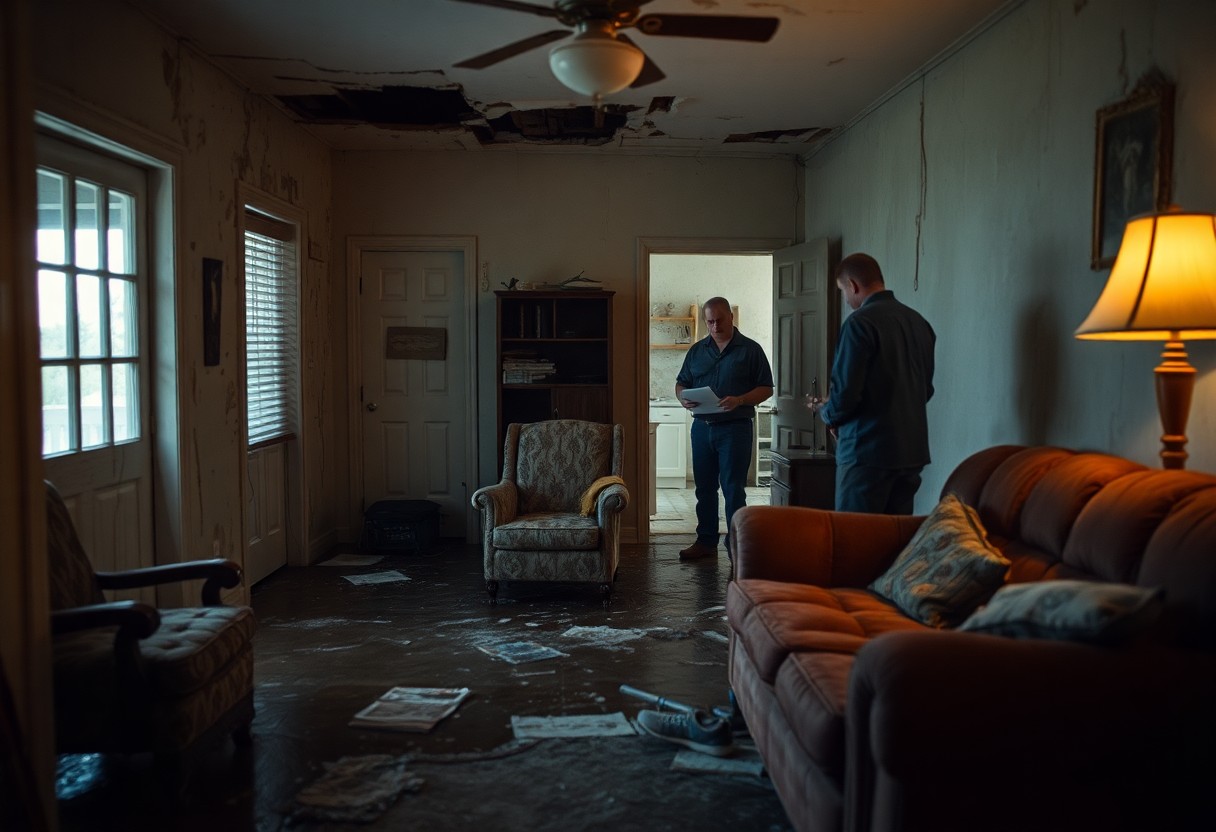
Once again, water damage can strike unexpectedly, making prompt assessment vital in mitigating its effects. The initial phase of recovery is to understand the situation at hand through a thorough evaluation process.
Initial Inspection Steps
Assessment begins with a careful inspection of the affected area. First, identify the source of the water intrusion—be it a burst pipe, flooding, or appliance failure. Next, check for visible signs of damage, such as wet walls, ceilings, or flooring. Document these findings and take photographs to aid in your recovery process.
Factors Influencing Damage Assessment
Water damage varies significantly based on several factors. Your assessment will be impacted by the type of water involved, duration of exposure, and materials affected. Pay attention to:
- Category of water: clean, gray, or black
- Extent of saturation in building materials
- Time elapsed since the initial water intrusion
Knowing how these elements interconnect will guide your next steps in recovery.
Assessing water damage effectively involves evaluating the specific conditions of your property. Each factor plays a role in determining the overall scope of the damage. For example, clean water may be easier to remediate than contaminated sources, and prolonged exposure increases the likelihood of mold growth. Consider the following:
- Environment: humidity levels and temperature
- Structural integrity of walls and flooring
- Presence of electrical systems in the affected area
Knowing these factors will enable you to make informed decisions throughout the recovery process.
Water Damage Recovery Techniques
Unlike many assume, effective water damage recovery requires a structured approach to minimize further damage to your property. By implementing the right techniques, you can restore your home efficiently and effectively.
Step-by-Step Recovery Process
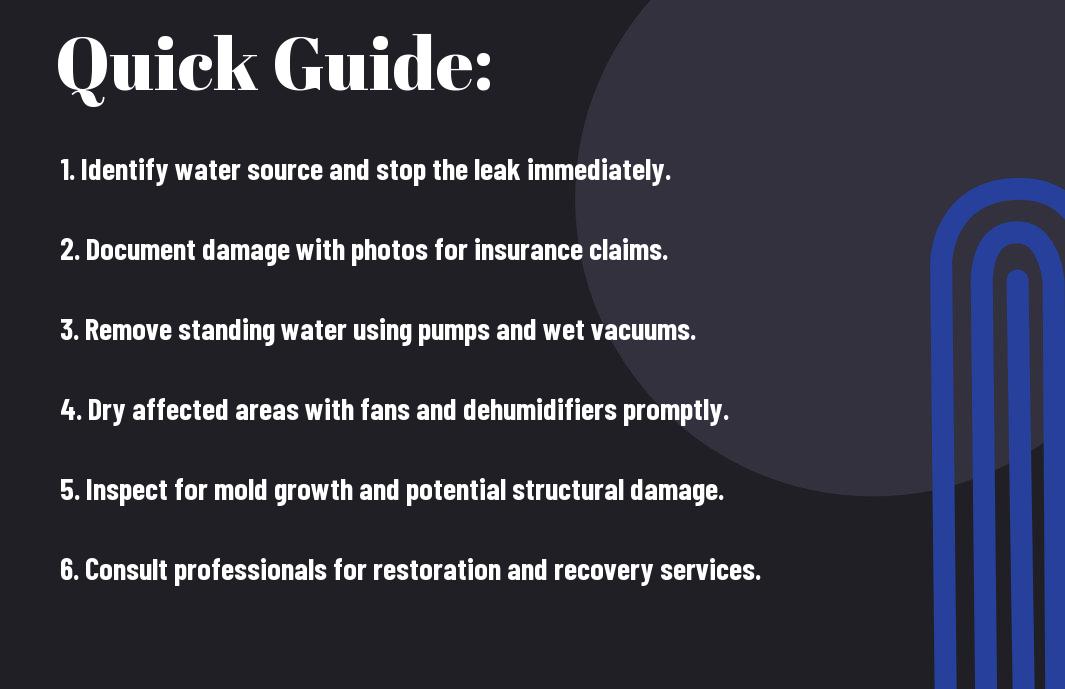
There's a systematic way to tackle water damage recovery that can help you navigate this challenging situation.
| Step | Action |
| 1 | Ensure safety by turning off main power and water supply. |
| 2 | Remove standing water using pumps or wet vacuums. |
| 3 | Dry out the area using dehumidifiers and fans. |
| 4 | Inspect and remove damaged materials (drywall, carpet). |
| 5 | Sanitize affected areas to prevent mold growth. |
Tips for Effective Recovery
To enhance your recovery efforts, consider implementing the following strategies:
- Document all damage for insurance claims.
- Act quickly to minimize damage and costs.
- Work with professionals when necessary.
- Keep your insurance company informed throughout the process.
Any proactive approach can significantly improve your outcomes during recovery. Taking time to evaluate your options before acting can save you stress and expenses.
Another helpful approach is to maintain clear communication with all parties involved in the recovery process. This ensures coordination and efficiency.
- Establish a timeline for repairs.
- Seek referrals for reliable restoration services.
- Stay on top of follow-ups with your insurance agent.
Any well-organized effort bolsters the chance of a successful return to normalcy in your home after experiencing water damage.
Professional Water Damage Services
For residents in Boise who experience water damage, hiring professional water damage services can make a significant difference in recovery time and quality. Professionals have the expertise and equipment necessary to assess damage thoroughly and restore your property efficiently.
Pros and Cons of Hiring Professionals
Clearly, there are several advantages and disadvantages to hiring professional services for water damage recovery. Below is a detailed breakdown:
| Pros | Cons |
| Expert assessment of damage | Potentially high costs |
| Specialized equipment and techniques | Time taken for consultation and service initiation |
| Ensures safety for you and your family | Less control over the process |
| Ability to handle large-scale damage effectively | May require scheduling flexibility |
| Offers warranties on the work performed | Possible ongoing maintenance issues |
Choosing the Right Restoration Company
Risks abound when selecting a restoration company, as the wrong choice can lead to prolonged damage and further complications. It's crucial to conduct thorough research and evaluate potential companies based on their experience, reviews, and specialized certifications. Doing so ensures that you partner with a trustworthy service that prioritizes your needs and safety.
It is advisable to look for companies that are licensed and insured in Idaho. Check customer testimonials and ask for references to gauge the quality of their services. Additionally, confirm that the company utilizes the latest technology and follows industry standards. By carefully considering these factors, you can select a restoration company that will help you manage your water damage effectively and efficiently.

Preventing Future Water Damage
Despite the best efforts to manage water damage, prevention remains the first line of defense. By implementing regular maintenance and establishing a plan for emergency situations, you can protect your home from potential water-related issues.
Maintenance Tips for Homeowners
An effective way to prevent water damage is through routine maintenance. Engage in the following practices:
- Inspect and clean gutters regularly to ensure proper drainage.
- Check for leaks in pipes, roofs, and windows.
- Maintain your landscaping to direct water away from your foundation.
- Install sump pumps or French drains in basements prone to flooding.
This proactive approach can significantly reduce the risk of water damage in your home.
Emergency Preparedness
Upkeep is important for minimizing water damage risk, but being prepared for emergencies can make a difference in how you respond. Have a response plan in place to safeguard your property and family.
Preparedness involves knowing where your main water shut-off valve is located and understanding how to use it quickly. Additionally, create an emergency kit that includes items such as flashlights, batteries, a first-aid kit, and important medications. Consider developing an evacuation plan and conducting regular drills with your family. This proactive stance will help you react swiftly and effectively in the event of water damage, further protecting your home and minimizing disruption to your life.
Local Resources in Boise, Idaho 83707
Not every aspect of water damage recovery needs to fall solely on your shoulders.
Community Assistance Programs
Clearly, there are various community assistance programs available in Boise that can help you navigate the aftermath of water damage. Local organizations often provide resources such as financial aid, temporary housing, and supplies to residents in need. Be sure to reach out to these programs to see how they can support you during this challenging time.
Local Restoration Service Providers
Idaho offers a range of local restoration service providers who specialize in water damage recovery. These professionals are equipped with the necessary tools and expertise to restore your property effectively. Their services may include water extraction, structural drying, mold remediation, and complete renovation.
Boise has several reputable restoration companies that you can rely on for immediate assistance. When identifying a service provider, consider their experience, customer reviews, and certifications. Engaging with a knowledgeable team can significantly streamline your recovery process and give you peace of mind as you work to restore your home or business.
Final Words
So, as you navigate the complexities of water damage assessment and recovery in Boise, Idaho 83707, it's vital to equip yourself with the right knowledge and resources. Understanding the assessment process, recognizing the signs of water damage, and knowing how to engage with professional services can significantly impact your recovery efforts. By taking proactive steps and prioritizing effective communication, you can mitigate damage and restore your property to its pre-loss condition with confidence.
FAQ
Q: What steps should I take immediately after discovering water damage in my home?
A: Upon noticing water damage, it is important to prioritize safety. First, turn off the electricity to the affected areas to prevent electrical hazards. Then, stop the water source if possible, whether that's a burst pipe or severe rain. After addressing these immediate concerns, begin assessing the extent of the damage by checking walls, floors, and personal belongings. Document the damage with photographs for insurance claims. Finally, contact a professional water damage restoration service to begin the recovery process.
Q: How can I identify the source of water damage in my property?
A: Identifying the source of water damage can sometimes be straightforward, such as seeing water pooling from a visible leak. However, hidden sources may require a thorough inspection. Look for signs like discoloration on walls or ceilings, damp spots, and musty odors. Check appliances, plumbing fixtures, and drainage systems. If the water damage is extensive or you are uncertain, hiring a professional with expertise in water damage assessment can lead to accurate identification and repair recommendations.
Q: What types of water damage should I be concerned about?
A: Water damage is categorized into three types. The first is “clean water” from a clean source, like a leaky faucet. The second is “gray water,” which may contain contaminants, such as from a washing machine or dishwasher. The third is “black water,” which is contaminated and poses health risks, like sewage or floodwater. Understanding these categories can help with the recovery process, including safety measures and necessary cleaning protocols.
Q: Will my homeowner's insurance cover water damage restoration?
A: Coverage for water damage restoration varies by policy and situation. Most standard homeowner's insurance policies cover water damage caused by sudden, accidental incidents, such as a burst pipe or appliance failure. However, damage from gradual wear or flooding may not be included. It is advisable to review your policy or contact your insurance provider to clarify what is covered, and ensure your coverage suits your needs, especially if you live in a flood-prone area.
Q: How long does the water damage recovery process typically take?
A: The duration of the water damage recovery process can vary greatly depending on several factors, including the extent of the damage, the size of the affected area, and the type of water involved. Minor incidents may be resolved within a few days, while extensive damage could take weeks. Active communication with a restoration professional can provide a clearer timeline based on the specific circumstances of your property.